
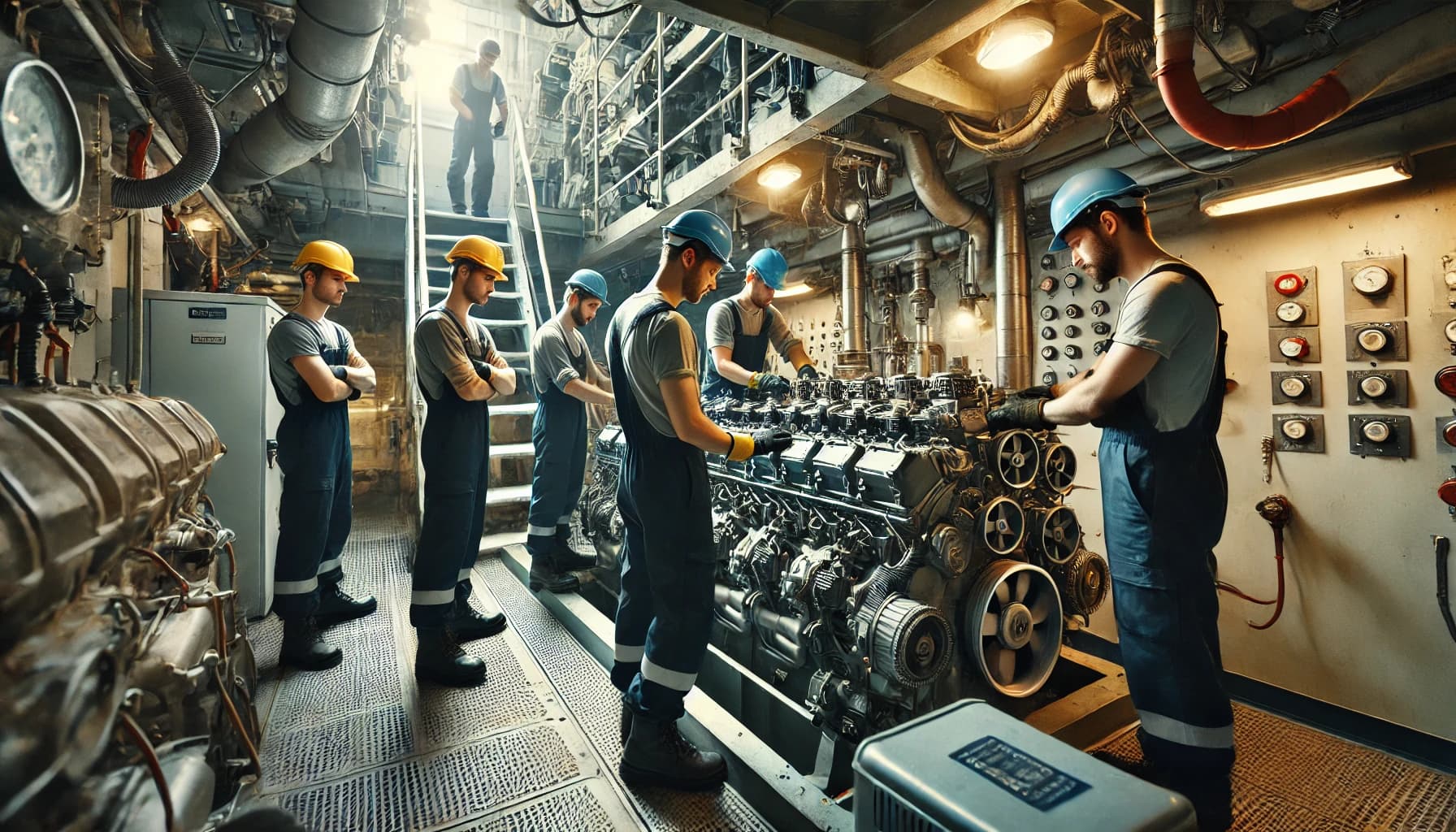
A career in the Merchant Navy offers exciting opportunities across various departments on board ships. One of the most technically important and demanding areas is the engine department merchant navy, which is responsible for all mechanical and engineering operations.
For aspiring seafarers aiming to become marine engineers, Skill Station, the best merchant navy institute, provides the knowledge, skills, and mentorship required to succeed in this specialised field.
What is the Engine Department?
The engine department merchant navy plays a critical role in maintaining and running the ship’s machinery, power generation, and propulsion systems. It ensures the vessel operates smoothly and safely during its voyage.
This department includes a team of professionals, from trainee engineers to the Chief Engineer, each with specific roles essential for daily operations. The engine room is the heart of the ship, and the engineers are its lifeline.
Key Roles in the Engine Department
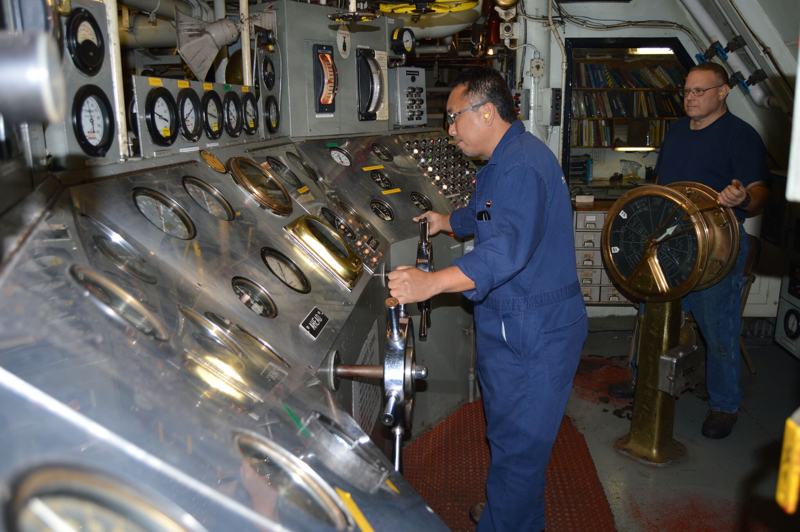
The structure of the engine department merchant navy is hierarchical. Here are the main ranks:
1. Chief Engineer
The Chief Engineer is the highest-ranking technical officer onboard. They oversee all engineering operations, ensure maintenance schedules are followed, and report to the Captain regarding technical performance.
2. Second Engineer
They handle the day-to-day functioning of the engine room and supervise junior engineers. The Second Engineer also manages the engine department’s daily log and maintains fuel consumption records.
3. Third Engineer
Responsible for auxiliary machinery like fresh water generators, pumps, and boilers. They also assist with watchkeeping.
4. Fourth Engineer
Usually assigned the responsibility of air compressors, purifiers, and sewage treatment plants. They also conduct engine room rounds.
5. Engine Cadet
Fresh graduates or trainees onboard to gain practical sea experience before taking their competency exams. They assist all engineers and learn through hands-on tasks.
Responsibilities and Duties
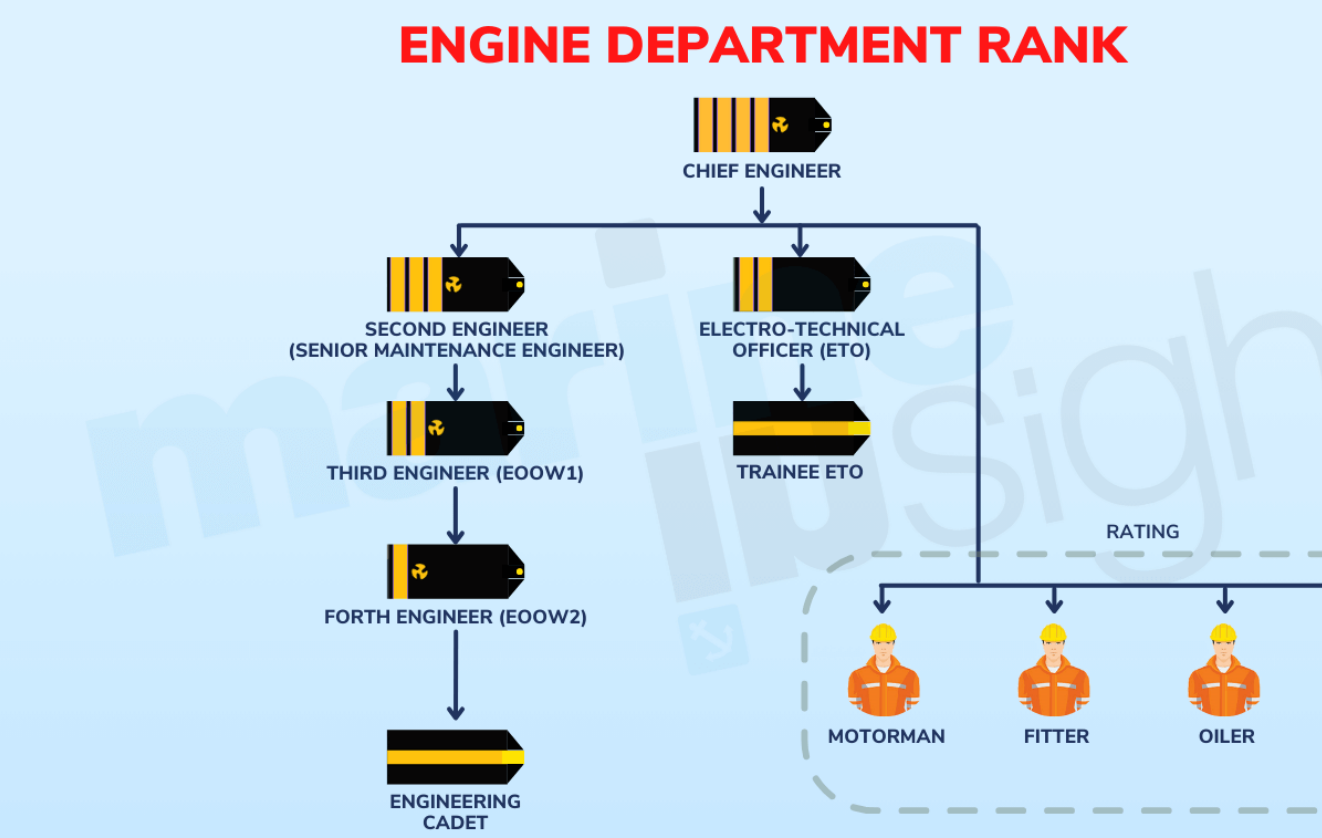
Engineers in the engine department merchant navy perform technical tasks that require precision and discipline. Their duties include:
Maintaining and operating engines, generators, and compressors
Monitoring pressure and temperature readings
Conducting preventive maintenance and overhauls
Ensuring fuel efficiency and emission control
Responding to mechanical emergencies
Keeping engine room logs and equipment performance records
These responsibilities demand both theoretical knowledge and practical skills, developed over time and through real-life experience.
Qualifications and Training
To join the engine department merchant navy, one must fulfil specific educational and physical criteria. Here is a breakdown:
Education Pathways:
B.Tech in Marine Engineering (4 years)
Graduate Marine Engineering (GME) course (1 year, for engineering graduates)
Certification Requirements:
IMU-CET Exam: Entry-level national test for merchant navy courses
STCW Courses: Basic safety training mandated by IMO
Medical Fitness: Approved by the DG Shipping authority
Practical Training:
Pre-sea training followed by onboard training for sea-time requirements
Institutes like Skill Station, acknowledged as the best merchant navy institute, offer structured programs that prepare candidates for these milestones through expert-led classes, mentorship, and mock assessments.
Career Growth Opportunities
The engine department merchant navy offers a clear and rewarding career ladder:
Engine Cadet → Fourth Engineer → Third Engineer → Second Engineer → Chief Engineer
Each level involves more responsibility and a significant salary jump. With experience, marine engineers can also move into shore-based positions like:
Technical Superintendent
Port Engineer
Marine Surveyor
Maritime Instructor
This upward mobility makes marine engineering a long-term and lucrative career choice.
Working Environment & Challenges
Working in the engine department merchant navy comes with unique challenges and demands:
Engineers work in hot, noisy engine rooms
Round-the-clock watch duties are standard
Emergency repairs can be physically and mentally taxing
However, it’s also one of the most respected and stable professions at sea. Engineers often work with cutting-edge technology and develop problem-solving abilities that are valued worldwide.
Industry Demand & Salaries
The demand for qualified engineers in the engine department merchant navy is strong due to increasing global trade and a shortage of skilled personnel. Salary packages are highly competitive:
Salary Overview:
Engine Cadet: ₹25,000–₹50,000/month
Fourth Engineer: ₹1.2 – ₹2 lakhs/month
Third Engineer: ₹2.5 – ₹3.5 lakhs/month
Second Engineer: ₹4 – ₹5 lakhs/month
Chief Engineer: ₹6 – ₹7.5 lakhs/month
Salaries vary depending on the vessel type (oil tanker, container ship, LNG carrier) and the shipping company. Foreign companies typically offer higher pay packages.
Why Choose Skill Station?
Based in Dehradun, Skill Station is a premier institution dedicated to preparing students for the merchant navy. Recognised as the best merchant navy institute, it stands out for:
Highly experienced faculty and marine professionals
Focused IMU-CET coaching programs
Training for sponsorship exams
Real-time mock tests and practical workshops
Placement support with top shipping companies
Students benefit from personalised mentorship and a result-oriented learning system, making Skill Station a reliable choice for engineering aspirants.
Conclusion
The engine department merchant navy offers an exciting, high-paying, and technically rewarding career. Whether you’re fascinated by machinery or looking for a stable global profession, this department provides both challenges and satisfaction.
From Engine Cadet to Chief Engineer, the path is structured but full of opportunities. With the right education and training, anyone can succeed in this field. For serious candidates aiming to make their mark, Skill Station, the best merchant navy institute, provides the perfect platform to launch your maritime engineering career.
Embark on your journey today—your future in marine engineering starts here
 Chat with us